

Have you ever wondered why a simple bowl of pasta and meat can make almost anyone feel like they are getting a warm hug from the inside out? There is something truly magical about the way tangy tomato sauce, soft noodles, and savory meat come together. While many people think you can only get “the good stuff” at a fancy restaurant, the truth is that you can make the world’s best spaghetti and meatballs right in your own kitchen.
Spaghetti and meatballs is more than just a meal. It is a tradition. Whether it is a busy Tuesday night or a slow Sunday afternoon, this dish always hits the spot. In this guide, we are going to walk through every step to make sure your meatballs are juicy, your sauce is bright, and your pasta is perfect.
Why This Recipe Is Special
Print
The Ultimate Guide to Classic Spaghetti and Meatballs
- Total Time: 60 minutes
- Yield: 4–6 servings 1x
Description
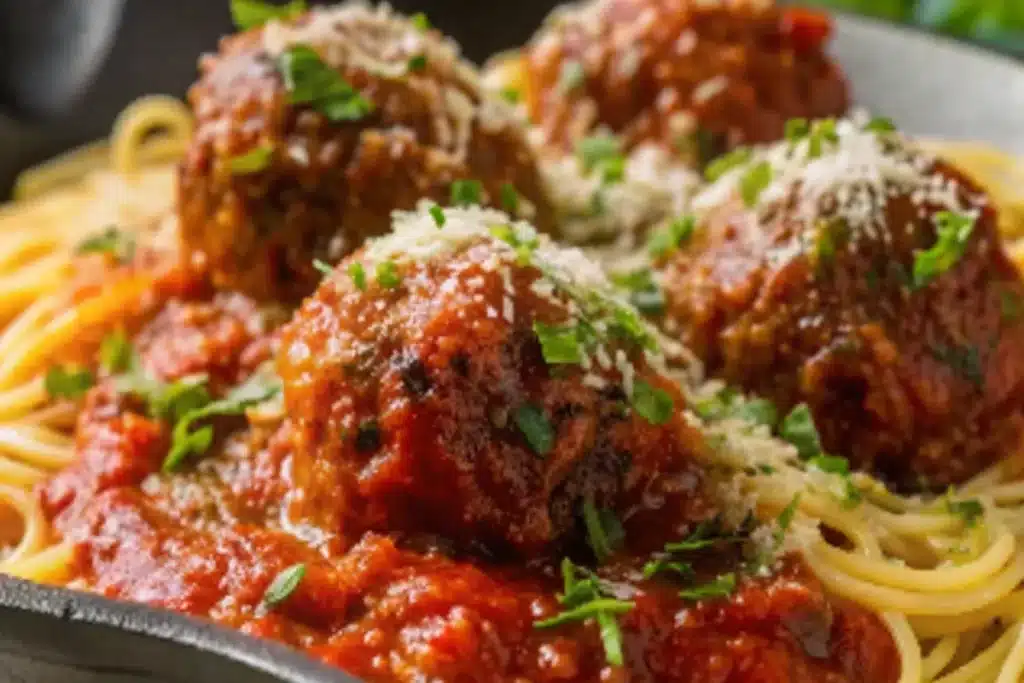
This classic comfort dish features juicy, skillet-seared meatballs and a rich, savory tomato sauce served over perfect al dente spaghetti. It is a family-favorite meal that tastes like a warm hug from the inside out, making it the perfect choice for busy weeknights or a slow Sunday tradition.
Ingredients
- For the Meatballs:
- 1 pound ground beef (80/20 lean)
- 1/2 pound ground pork
- 1/2 cup breadcrumbs (plain or Italian seasoned)
- 1/4 cup milk (to keep meatballs soft)
- 1 large egg (to act as glue)
- 1/2 cup grated Parmesan cheese
- 3 cloves garlic, minced very small
- 2 tablespoons chopped fresh parsley
- 1 teaspoon salt
- 1/2 teaspoon black pepper
- 1/2 teaspoon dried oregano
- For the Sauce and Pasta:
- 1 pound spaghetti (one standard box)
- 1 can (28 ounces) crushed tomatoes
- 2 tablespoons olive oil
- 1 small onion, finely diced
- 2 cloves garlic, minced
- 1 teaspoon dried basil
- 1 teaspoon sugar (to cut the acid)
- Salt and pepper to taste
Instructions
- Make the Panade: Soak breadcrumbs in milk for 5 minutes until it looks like a paste to ensure moist meatballs.
- Mix and Roll: Gently combine beef, pork, egg, cheese, parsley, garlic, spices, and the breadcrumb paste. Roll into 16-20 golf-ball-sized rounds.
- Brown the Meat: Heat olive oil in a large skillet over medium heat. Brown meatballs on all sides for 5-7 minutes to create a flavorful crust, then set aside.
- Prepare the Sauce: In the same skillet, sauté onion and garlic. Stir in crushed tomatoes, basil, sugar, salt, and pepper.
- Simmer: Return meatballs to the sauce, cover, and simmer on low for 20-25 minutes until cooked through.
- Boil Pasta: Cook spaghetti in salted water until al dente, then drain.
- Assemble: Toss pasta with sauce and top with the meatballs and extra Parmesan.
Notes
Use your hands to mix the meat so you do not overwork it—this keeps the texture light. For extra flavor, keep the brown bits in the pan after searing the meat to build your sauce. If the sauce is too thick when reheating, simply add a small splash of water or broth.
- Prep Time: 20 minutes
- Cook Time: 40 minutes
- Category: Main Dish
- Method: Stovetop/Skillet
- Cuisine: Italian-Style
Nutrition
- Serving Size: 1 serving
- Calories: 580
- Sugar: 8g
- Sodium: 920mg
- Fat: 24g
- Saturated Fat: 9g
- Carbohydrates: 62g
- Fiber: 4g
- Protein: 28g
This recipe is special because it focuses on balance. We do not want meatballs that are as hard as golf balls, and we do not want a sauce that tastes like plain canned tomatoes. This version uses a mix of meats for the best flavor and a few “secret” steps to keep everything moist and tender.
- Difficulty Level: Easy to Medium
- Preparation Time: 20 minutes
- Cooking Time: 40 minutes
- Total Time: 1 hour
- Serves: 4 to 6 people
Essential Ingredients
To make great spaghetti and meatballs, you need fresh ingredients. Here is what you will need to gather before you start cooking.
For the Meatballs
- Ground Beef (80/20 lean): 1 pound
- Ground Pork: 1/2 pound (adds fat and moisture)
- Breadcrumbs: 1/2 cup (plain or Italian seasoned)
- Milk: 1/4 cup (this keeps the meatballs soft)
- Egg: 1 large (acts as the glue)
- Parmesan Cheese: 1/2 cup, grated
- Garlic: 3 cloves, minced very small
- Fresh Parsley: 2 tablespoons, chopped
- Salt: 1 teaspoon
- Black Pepper: 1/2 teaspoon
- Dried Oregano: 1/2 teaspoon
For the Sauce and Pasta
- Spaghetti: 1 pound (one standard box)
- Crushed Tomatoes: 1 can (28 ounces)
- Olive Oil: 2 tablespoons
- Onion: 1 small, finely diced
- Garlic: 2 cloves, minced
- Dried Basil: 1 teaspoon
- Sugar: 1 teaspoon (this cuts the acid of the tomatoes)
- Salt and Pepper: To taste
Substitutions and Variations
If you do not eat pork, you can use 1.5 pounds of ground beef. If you want a lighter version, ground turkey works well, but you may need to add an extra splash of olive oil so it does not get dry. For a gluten-free version, simply use gluten-free breadcrumbs and your favorite gluten-free pasta.
Step-by-Step Instructions
Step 1: Make the Panade
A “panade” is a fancy word for mixing bread and liquid. In a small bowl, soak your 1/2 cup of breadcrumbs in the 1/4 cup of milk. Let it sit for 5 minutes until it looks like a paste. This is the secret to making meatballs that never get tough.
Step 2: Mix the Meatballs
In a large bowl, combine the ground beef, ground pork, egg, cheese, parsley, garlic, salt, pepper, oregano, and your breadcrumb paste.
Pro Tip: Use your hands! It is the best way to make sure everything is mixed without overworking the meat. If you squeeze the meat too much, the meatballs will become dense. Mix just until everything looks even.
Step 3: Roll the Balls
Scoop out about 2 tablespoons of meat at a time. Roll them between your palms to make a ball about the size of a golf ball. You should get about 16 to 20 meatballs.
Step 4: Brown the Meat
Put a large skillet or pot on the stove over medium heat. Add 1 tablespoon of olive oil. Place the meatballs in the pan. Do not crowd them! Work in two batches if you need to. Brown them on all sides for about 5 to 7 minutes. They do not need to be cooked all the way through yet; we just want a nice brown crust for flavor. Remove them and set them on a plate.
Step 5: Make the Sauce
In the same pan (keep those brown bits from the meat!), add the rest of the olive oil and the diced onion. Cook until the onion is soft. Add the garlic and cook for 1 minute. Pour in the crushed tomatoes, basil, sugar, salt, and pepper. Stir it all together.
Step 6: Simmer
Gently place the meatballs back into the sauce. Turn the heat down to low. Cover the pan and let it simmer for 20 to 25 minutes. This allows the meatballs to cook through while soaking up the sauce.
Step 7: Boil the Pasta
While the sauce simmers, bring a large pot of water to a boil. Add a big pinch of salt. Cook the spaghetti according to the box instructions. You want it to be “al dente,” which means it still has a little bit of a firm bite.
Assembly and Presentation
Building the perfect plate of spaghetti and meatballs is an art form. You have two choices for how to serve this:
- The Mixed Method: Drain your pasta and put it back in the pot. Add a few ladles of sauce (without the meatballs) to the pasta and toss it. This ensures every strand of noodle is coated. Then, plate the pasta and top it with the meatballs and extra sauce.
- The Topped Method: Place plain pasta in a bowl and pour the sauce and meatballs directly over the top. This looks very pretty for photos.
Presentation Tips:
- Sprinkle extra grated Parmesan cheese over the top while it is hot.
- Add a pinch of fresh chopped parsley for a bright green color.
- Serve with a side of toasted garlic bread to soak up any leftover sauce.
Storage and Make-Ahead Tips
Spaghetti and meatballs might actually taste better the next day! The flavors have more time to mingle in the fridge.
- To Store: Put the sauce and meatballs in an airtight container. Keep the pasta in a separate container if possible so it does not get mushy. It will stay fresh in the fridge for up to 4 days.
- To Freeze: You can freeze cooked meatballs in their sauce for up to 3 months. This is a great “emergency meal” for a busy night.
- To Reheat: Reheat the sauce and meatballs in a small pot over low heat on the stove. If the sauce is too thick, add a splash of water.
Recipe Variations
Once you master the classic version, try these fun twists:
- Spicy Meatballs: Add 1/2 teaspoon of red pepper flakes to the meat mixture and the sauce.
- Stuffed Meatballs: Place a small cube of mozzarella cheese in the center of each meatball before rolling.
- Vegetable Boost: Grate a small zucchini or carrot and mix it into the meat. It adds vitamins and keeps the meat extra juicy.
- Baked Version: If you want to skip the frying, bake the meatballs at 400 degrees Fahrenheit for 15 to 20 minutes before adding them to the sauce.
Conclusion
Making classic spaghetti and meatballs is a skill that will serve you well for a lifetime. It is a hearty, healthy, and versatile dish that everyone loves. Remember, the most important ingredients are patience and a little bit of love. Do not be afraid to taste your sauce as it cooks and add a little more salt or herbs if you think it needs it.
Now it is your turn to get in the kitchen! Grab your apron, put on some music, and start rolling those meatballs. Your family will thank you.
FAQs
Is spaghetti and meatballs healthy?
Yes! It provides protein from the meat, energy-giving carbohydrates from the pasta, and vitamins like Lycopene from the cooked tomatoes. To make it even healthier, you can use whole-wheat pasta or add extra veggies to the sauce.
Why do my meatballs fall apart?
This usually happens if you do not use enough “binder.” The egg and the breadcrumbs act as glue. Make sure you don’t skip those! Also, letting the meatballs brown in the pan before stirring them helps them hold their shape.
Can I make the meatballs in an air fryer?
You certainly can. Cook them at 375 degrees Fahrenheit for about 10 to 12 minutes. Then, drop them into your simmering sauce to finish.
How do I know when the meatballs are done?
The best way is to use a meat thermometer. The internal temperature should reach 160 degrees Fahrenheit. If you don’t have one, cut one meatball in half; it should be brown all the way through with no pink in the middle.
What kind of tomatoes are best for the sauce?
Crushed tomatoes provide a nice thick texture. If you like a very smooth sauce, use tomato puree. If you like it chunky, use diced tomatoes or whole peeled tomatoes that you crush with a spoon.


