

Have you ever wondered why people only wait for fancy holidays or expensive steakhouse visits to enjoy a succulent lobster dinner? Many people believe that cooking lobster at home is a difficult task reserved for professional chefs, but what if I told you that you can make restaurant-quality lobster in your own kitchen in less than twenty minutes?
Overview of Garlic Butter Lobster Tails
Print
How to Make the Best Garlic Butter Lobster Tails
- Total Time: 17 minutes
- Yield: 2 servings 1x
Description
This recipe for Garlic Butter Lobster Tails is designed to take the intimidation factor out of seafood. What makes this version special is the balance between the natural sweetness of the lobster meat and a rich, velvety garlic butter sauce that soaks into every crevice of the tail. It is a beginner-friendly recipe that works perfectly for a romantic date night or a celebratory Sunday dinner.
Ingredients
- 5–7 oz cold water lobster tails
- Unsalted grass-fed butter
- Fresh garlic cloves, minced
- Fresh lemon juice
- Smoked paprika
- Fresh parsley, chopped
- Salt and black pepper to taste
Instructions
- Butterfly the Tails: Using sharp kitchen shears, snip down the center of the shell toward the tail fan. Stop just before the fins. Lift the meat up and rest it on top of the shell.
- Make the Garlic Butter: Melt butter over low heat. Add minced garlic and cook for 60 seconds. Whisk in lemon juice, smoked paprika, salt, and pepper. Remove from heat and stir in parsley.
- Baste and Bake: Place tails on a baking sheet and brush generously with the garlic butter.
- Cook to Perfection: Bake at 400°F (200°C) for 12-15 minutes until meat is opaque and white.
- Rest and Garnish: Spoon remaining butter over the tails. Garnish with fresh parsley and serve with lemon wedges.
Notes
Cold water lobster is preferred for firmer, sweeter meat. Avoid overcooking to prevent the lobster from becoming rubbery. For extra brightness, add a squeeze of lemon juice before serving.
- Prep Time: 5 minutes
- Cook Time: 12 minutes
- Category: Main Dish
- Method: Oven
- Cuisine: Seafood
Nutrition
- Serving Size: 1 tail
- Calories: 280
- Sugar: 1g
- Sodium: 420mg
- Fat: 22g
- Saturated Fat: 14g
- Unsaturated Fat: 6g
- Trans Fat: 0g
- Carbohydrates: 2g
- Fiber: 0g
- Protein: 19g
- Cholesterol: 110mg
This recipe for Garlic Butter Lobster Tails is designed to take the intimidation factor out of seafood. What makes this version special is the balance between the natural sweetness of the lobster meat and a rich, velvety garlic butter sauce that soaks into every crevice of the tail.
You do not need fancy equipment or hours of preparation time. This meal is surprisingly quick, taking about five minutes to prep and twelve minutes to cook. On a scale of difficulty, this is a beginner-friendly recipe. If you can use kitchen shears and melt butter, you can master this dish. It is a versatile meal that works perfectly for a romantic date night, a celebratory Sunday dinner, or even a high-protein midweek treat.
Essential Ingredients
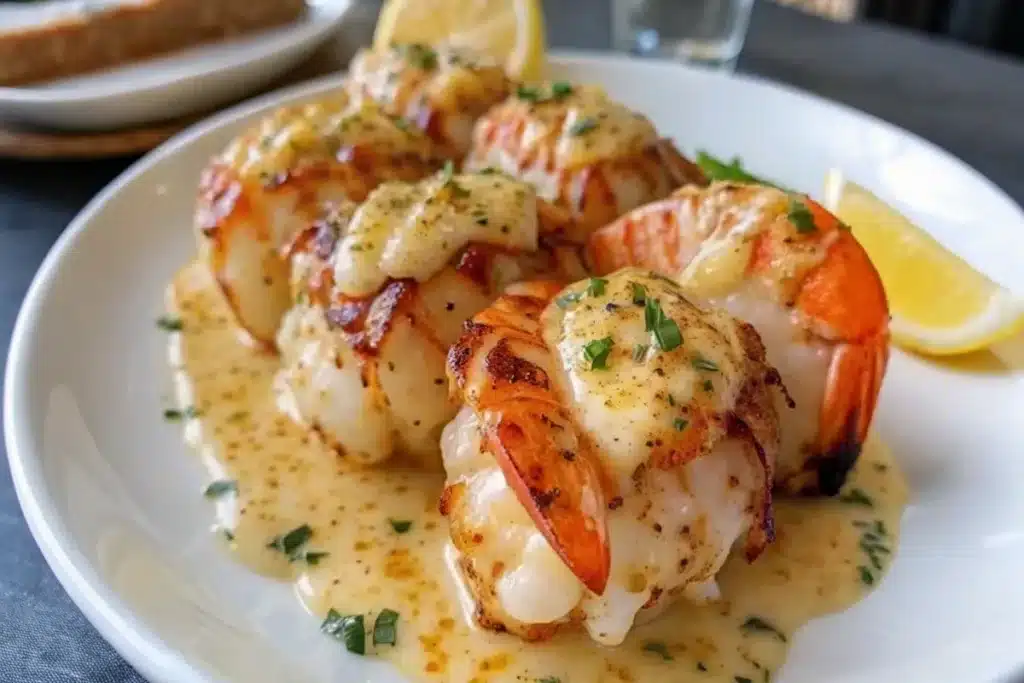
To get the best results, start with high-quality ingredients. Because this recipe has a short list of items, the flavor of each one really stands out.
Main Ingredients
- Cold Water Lobster Tails: Look for tails that are between five and seven ounces. Cold water lobster is generally preferred over warm water lobster because the meat is firmer and sweeter.
- Unsalted Butter: Using unsalted butter allows you to control the salt level of the dish. Make sure it is high-quality grass-fed butter for the creamiest texture.
- Fresh Garlic: Use fresh cloves rather than the pre-minced jars. The oils in fresh garlic provide a much sharper and more aromatic flavor.
- Fresh Lemon Juice: The acidity cuts through the richness of the butter and brightens the seafood.
- Smoked Paprika: This adds a beautiful golden-red color to the meat and a very subtle hint of earthiness.
- Fresh Parsley: This is used for a pop of color and a fresh finish.
- Salt and Black Pepper: Basic seasonings to enhance the natural flavors.
Substitutions and Variations
If you cannot find lobster tails, this same garlic butter preparation works wonderfully with jumbo shrimp or sea scallops. For a dairy-free version, you can substitute the butter with a high-quality vegan butter stick or even extra virgin olive oil, though the flavor will be more Mediterranean in style. If you like a bit of heat, you can add a pinch of red pepper flakes to the butter mixture.
Step-by-Step Instructions
Cooking lobster is all about timing. Because lobster is a lean protein, it can go from perfect to rubbery in just a minute. Follow these steps to ensure yours stays tender.
1. Prepping the Tails (The Butterfly Technique)
The most important part of the preparation is “butterflying” the tail. This places the meat on top of the shell, which looks beautiful and allows the heat to cook the meat evenly.
- Hold a lobster tail in one hand with the hard top shell facing up.
- Using sharp kitchen shears, snip down the center of the shell toward the tail fan. Stop just before you reach the fins at the end.
- Use your thumbs to gently push the shell apart.
- Run your finger between the meat and the bottom shell to loosen it, but keep the meat attached at the very base of the tail.
- Lift the meat up and through the slit you made, resting it on top of the closed shell.
2. Making the Garlic Butter
While your oven preheats to 400 degrees Fahrenheit, prepare your basting liquid.
- Melt the butter in a small saucepan over low heat.
- Add the minced garlic and cook for about one minute until you can smell it. Do not let the garlic turn brown, as it will become bitter.
- Whisk in the lemon juice, smoked paprika, salt, and pepper.
- Remove from heat and stir in the chopped parsley.
3. The Cooking Process
- Place the prepared lobster tails on a rimmed baking sheet.
- Brush a generous amount of the garlic butter over the exposed lobster meat.
- Place the tray in the center rack of the oven.
- Bake for approximately twelve to fifteen minutes. You will know they are done when the meat is opaque and white, and the shells have turned a bright, vibrant red.
Assembly and Presentation
Once the lobster tails come out of the oven, they are nearly ready to serve. The way you present this dish can make a simple meal feel like a five-star experience.
Final Touches
Immediately after removing the tails from the oven, spoon the remaining garlic butter from the pan over the top of the meat. This ensures the meat stays moist as it rests for a minute. Sprinkle a few more pinches of fresh parsley over the top for a professional look.
Serving Suggestions
Serve the lobster tails on a white plate to make the red shells and golden butter pop. Place a fresh lemon wedge on the side of each tail so guests can add an extra squeeze of citrus if they like. This dish pairs excellently with light sides like roasted asparagus, a crisp green salad, or a small portion of garlic mashed potatoes.
Storage and Make-Ahead Tips
Lobster is best enjoyed immediately after cooking, but if you have leftovers, they can be stored safely.
Storage
Place leftover lobster tails in an airtight container. They will stay fresh in the refrigerator for up to two days. It is best to keep the meat in the shell during storage to prevent it from drying out.
Reheating
To reheat, avoid the microwave, as it will make the lobster rubbery. Instead, place the tails in a baking dish with a splash of water or a little extra butter. Cover the dish tightly with foil and heat in a 300-degree oven for about ten minutes until just warmed through.
Make-Ahead
You can butterfly the lobster tails and prepare the garlic butter several hours in advance. Keep the tails covered in the fridge and the butter at room temperature. When you are ready to eat, simply brush the butter on and pop them in the oven.
Recipe Variations
While the classic garlic butter version is a favorite, you can change the flavor profile easily.
- Cajun Style: Replace the smoked paprika with a tablespoon of Cajun seasoning for a spicy, bold kick.
- Parmesan Crust: In the last two minutes of baking, sprinkle a tablespoon of grated parmesan cheese over the meat for a salty, savory crust.
- Herb Garden: Use a mix of fresh dill, chives, and tarragon instead of just parsley for a more complex herbal flavor.
Conclusion
Learning how to make Garlic Butter Lobster Tails is a fantastic way to bring a touch of luxury into your home cooking. It is a healthy, fast, and impressive dish that proves you do not need to be a professional to handle seafood. The most important thing is to have fun with the process. Once you see how easy it is to butterfly a tail and create a rich sauce, you will feel more confident experimenting with other types of seafood. Go ahead and treat yourself to a delicious lobster dinner tonight.
FAQs
Is lobster healthy?
Yes, lobster is a great source of lean protein. It contains omega-3 fatty acids, which are good for heart health, and is rich in vitamins like B12 and minerals like zinc and selenium. When served with a moderate amount of butter, it is an excellent choice for many diets.
How do I know when the lobster is fully cooked?
The best way to tell is by the color and texture. The meat should change from translucent and greyish to a solid, bright white. If you have a meat thermometer, the internal temperature should reach 140 degrees Fahrenheit.
Can I use frozen lobster tails?
Absolutely. Most lobster tails sold in grocery stores have been frozen at some point. Just make sure to thaw them completely in the refrigerator overnight before cooking. If you try to cook them while they are still frozen, the meat will be tough and will not cook evenly.
Why is my lobster meat sticking to the shell?
This usually happens if the lobster is slightly overcooked or if it wasn’t loosened properly before baking. Be sure to run your finger or a small spoon between the meat and the shell during the butterfly process to break those membranes before you put it in the oven.
What should I do if I don’t have kitchen shears?
While kitchen shears are the easiest tool, you can use a very sharp chef’s knife. Carefully press the knife down through the center of the shell, being careful not to cut all the way through the bottom shell or your hand.


